The Allumette Embroidery Font: Crafting Elegance in Every Stitch
There is a distinct satisfaction in seeing a needle dance across fabric, turning a digital concept into a tangible, textured reality. For anyone who owns an embroidery machine, the search for the perfect typeface is often more challenging than mastering the machine itself. We have all been there: you find a beautiful script online, run it through software, and the result is a tangled mess of jump stitches or a design so dense it turns a soft cotton t-shirt into cardboard. This is where the distinction between standard graphic design and machine embroidery becomes critical. You aren't just looking for a pretty font; you are looking for a digitized roadmap that respects the physics of thread and fabric.
The "Allumette" embroidery font enters the scene not just as a set of letters, but as a carefully engineered tool for makers. It represents that elusive middle ground in typography—stylish enough to catch the eye, yet structured enough to stitch out cleanly on home and commercial machines. If you have been struggling to find a typeface that feels both modern and timeless, or if you are looking to elevate the perceived value of your finished goods, understanding the mechanics and aesthetics of a premium font like this is your first step toward better craftsmanship.
Beyond the Alphabet: The Anatomy of a Premium Embroidery Font
When we talk about typography in the context of embroidery, we are discussing "pull compensation" and "underlay" as much as we are discussing serifs and kerning. The Allumette font is designed specifically for the PES file format, which is the native language for industry giants like Brother and Babylock. This isn't a conversion from a vector file; it is digitized specifically for stitching. This means the software controlling your machine knows exactly where to place the needle to create sharp corners and smooth curves without breaking the thread.
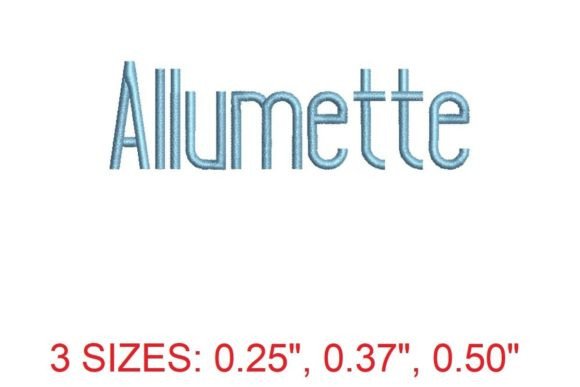
Visually, Allumette strikes a balance that many commercial fonts miss. It possesses a "matchstick" aesthetic—hence the name—implying slender, deliberate strokes. It avoids the overly ornate swashes that look beautiful on a website but impossible to read on a baby bib. Instead, it offers a clean, legible structure that functions as a display font but retains the readability of a workhorse typeface. Whether you are stitching a monogram on a dense towel or a name on delicate silk, the stitch count and pathing are optimized to maintain the integrity of the fabric.
Visual Consistency and Brand Identity
For small business owners and entrepreneurs, branding is everything. You can have a fantastic logo, but if you cannot replicate it accurately on your merchandise, your brand identity fragments. Imagine you run a boutique selling personalized denim jackets or high-end corporate gifts. Your physical products are often the most tangible touchpoint your customer has with your brand.
Using a high-quality typeface like Allumette ensures that the text on your physical products matches the professionalism of your digital presence. It allows for visual consistency across different mediums. If you are creating a series of products—say, a line of monogrammed tote bags for a wedding—the uniformity of the letter spacing (kerning) is vital. Allumette is built to handle these connections seamlessly, ensuring that a "W" next to an "A" looks just as intentional as an "M" next to an "I." This level of detail is what separates amateur crafts from professional, saleable goods.
Practical Applications: From Garments to Home Decor
The versatility of the Allumette font allows it to adapt to a wide range of creative projects. Because it is provided in multiple sizes and includes 156 letters and punctuation marks, it is equipped for complex projects beyond simple initials.
Consider the world of packaging design and merchandise. A handwritten, script, or modern serif font can drastically change the "vibe" of a product. Allumette leans into a style that feels personal yet polished. It is perfect for:
- Apparel: Think of the classic look of a varsity jacket or a minimalist logo on a polo shirt. The font’s structure holds up well on woven fabrics where threads can distort thinner lines.
- Home Decor: For items like throw pillows, tea towels, or table linens, you want a font that feels "at home." The elegance of Allumette adds a touch of sophistication without looking out of place in a living room setting.
- Accessories: Embroidering on structured items like canvas tote bags or baseball caps requires a font that can curve with the surface. The digitization of this font accounts for such distortions, ensuring legibility even on curved planes.
Matching Typography to Project Goals
Choosing the right font is a strategic decision, not just an aesthetic one. It is about communicating the right emotion instantly. When you look at the Allumette font, what does it say? It suggests elegance, attention to detail, and a bespoke quality. It is the typographic equivalent of a firm handshake—confident and professional.
If you are designing for invitations or editorial layouts (perhaps for a styled photoshoot), this font serves as a beautiful accent. However, for web design or social media graphics, where you might be mocking up physical products to sell online, showing this font in use helps set customer expectations. It signals to the buyer that the item they are receiving is crafted with care.
When pairing Allumette with other typefaces, let it take the lead. Because it has a strong personality, it pairs best with simpler, sans-serif fonts for secondary information. For example, if you are creating a brand identity kit, use Allumette for the main logo or monogram, and a clean sans-serif for the address or tagline. This contrast prevents the design from looking cluttered and ensures the primary message—the name—stands out.
Navigating the Technical Landscape
One of the most common frustrations in machine embroidery is file compatibility. The Allumette font is designed to bypass these headaches by offering broad compatibility, specifically targeting the PES format which dominates the home embroidery market. However, the utility of the font extends further through its multiple file formats, ensuring that whether you are using a Brother machine or another popular brand, the transition from computer to machine is smooth.
A practical tip for users is to always review the "More Sewing Info" details provided. While the summary gives you the stitch count for the letter "A," your project might require a dense fill for visibility or a lighter fill for drape. Understanding the stitch density helps you choose the right stabilizer. For a font like Allumette, which balances style with structure, a medium-weight cutaway stabilizer often yields the best results on knits, while a tear-away works well for wovens.
The Commercial Advantage: Licensing and Creativity
For the creative entrepreneur, the question of usage rights is paramount. When investing in a design asset like a premium font, you are buying the tool, but you must also understand the license. A font designed for commercial use allows you to sell the finished embroidered product without legal gray areas. This is essential for anyone running an Etsy shop, a local boutique, or a corporate gift service.
Allumette is positioned as a creative font that bridges the gap between personal hobby and commercial production. Its "timeless appeal" means you aren't chasing a micro-trend that will look dated in six months. Instead, you are investing in a typographic asset that can be used for years on wedding gifts, baby shower favors, corporate swag, and seasonal merchandise.
Final Thoughts on Stitching Excellence
The difference between a good project and a great project often lies in the details. The "Allumette" embroidery font offers a way to infuse your work with elegance and professionalism. It is a testament to the idea that functional tools can also be beautiful objects. By choosing a font that is engineered for the specific demands of thread and needle, you ensure that your creativity is not limited by your tools. Whether you are a seasoned digitizer or a hobbyist looking to upgrade your library, embracing a typeface like Allumette is a step toward making every stitch count.