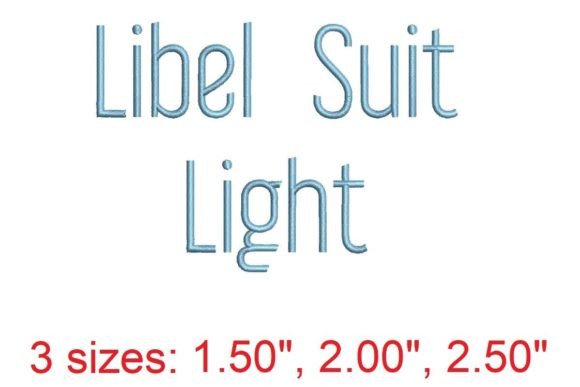
Libel Suit LT Embroidery Font: Elevate Your Stitching Projects
Every crafter knows the moment a project goes from "nice" to "wow"—and more often than not, it's the details that make the difference. Whether you're monogramming a gift, branding handmade goods, or adding custom text to a quilt, the font you choose carries real weight. That's where Libel Suit LT embroidery font enters the conversation, offering a polished, versatile typeface designed specifically for machine embroidery. With 156 letters included and multiple file formats for broad machine compatibility, this font set opens up creative possibilities that extend well beyond basic stitching.
A Typeface Built for Textile and Beyond
What makes Libel Suit LT stand out among embroidery fonts? It starts with precision. Each letter has been digitized to produce clean, consistent stitches across a range of sizes. The design strikes a balance between elegance and readability—neither too ornate to decipher on fabric nor too plain to feel special. This makes it a strong candidate not just for hobbyist projects but for small business owners who need their embroidered products to look professional and intentional.
The font's visual personality leans toward a refined, slightly editorial aesthetic. Think of it as the embroidery equivalent of a well-crafted serif or modern display typeface—something that communicates quality without shouting. That subtlety is exactly what makes it versatile. A monogram on a linen napkin, a brand name stitched onto a canvas tote, a personalized label inside a handmade garment—Libel Suit LT adapts to each context while maintaining its distinctive character.
Practical Applications Across Creative and Commercial Projects
For small business owners in the handmade or custom goods space, consistent branding matters. Customers remember the details: a neatly stitched logo on a product tag, a personalized name on a baby blanket, or a cohesive set of embroidered items that all share the same typographic voice. Libel Suit LT embroidery font supports this kind of visual consistency. Because it includes a full character set—uppercase, lowercase, numerics, and common punctuation—you can reproduce names, phrases, and short copy accurately across different products and sizes.
Consider a few real-world scenarios where this font shines:
- Branding and logo embroidery: Stitch your business name or logo onto aprons, hats, uniforms, or packaging materials. A clean, readable font reinforces brand recognition every time a customer sees your products.
- Personalized merchandise: Monogrammed towels, custom baby gifts, embroidered patches—these are products people buy because of the personal touch. A font that renders beautifully at small and medium sizes makes customization effortless.
- Event and occasion work: Wedding linens, anniversary gifts, holiday stockings, graduation keepsakes. Embroidered text adds a layer of sentimentality that printed labels simply can't match.
- Home decor projects: Cushions, wall hangings, table runners—text-based embroidery can transform everyday textiles into statement pieces.
Even beyond the embroidery machine, the font's design principles translate well. If you're building a brand identity that includes embroidered elements alongside digital assets—social media graphics, website headers, printed packaging—using a cohesive typeface across channels strengthens your visual communication. While Libel Suit LT is optimized for stitching, its aesthetic can inspire complementary choices in your broader design toolkit, whether you're selecting a premium font for your website or choosing a script font for printed invitations.
Getting the Most from Your Embroidery Font
Working with embroidery fonts requires a slightly different mindset than choosing typography for a screen or print project. Stitch density, fabric type, thread weight, and hoop size all influence how a finished letter looks. Here are a few practical considerations to keep in mind:
- Match the font size to your fabric. Delicate fabrics like silk or lightweight cotton may not support very dense stitching, while heavier materials like denim or canvas can handle more detailed lettering. Review the included size and stitch information—provided as a summary for the letters "A" and "a" in each available size—to get a sense of density before committing to a full project.
- Test before you commit. Always run a sample stitch on the same fabric and stabilizer you plan to use for the final piece. This simple step prevents wasted time and materials, and it gives you a chance to adjust thread tension or needle choice if needed.
- Consider readability at a distance. Embroidered text often needs to be legible from several feet away—think signage, tote bags, or garment labels. Libel Suit LT's clean letterforms support this, but it's still worth testing how your chosen size reads in context.
- Think about thread color contrast. A beautiful font can lose its impact if the thread color blends too closely with the fabric. High contrast generally improves readability, especially for smaller text.
- Use the full character set strategically. With 156 letters included, you have flexibility. Use uppercase for bold statements and headings, lowercase for a softer, more personal tone. Mixing cases thoughtfully can add visual interest to longer phrases.
It's also worth noting the practical details of the file itself. Libel Suit LT comes in multiple embroidery file formats, which means it's compatible with a wide range of machines. This flexibility is especially useful if you work across different equipment or collaborate with other embroiderers who may use different systems. The included PDF with full dimension details for all 156 letters is a valuable reference—print it out or keep it on your tablet for quick consultation during project planning.
Font Pairing and Design Thinking
Even in embroidery, font pairing matters. If you're designing a product label that includes both a brand name and a tagline, you might set the name in Libel Suit LT and pair it with a simpler sans serif or clean script font for supporting text. The contrast creates visual hierarchy and keeps the overall design from feeling flat. This is the same principle graphic designers apply to editorial layouts, packaging design, and web typography—embroidery is simply another medium for the same ideas.
When selecting complementary fonts for digital or print elements of your brand, look for typefaces that share a similar mood or era without being identical. A modern display font with clean geometry can work alongside Libel Suit LT if both communicate a sense of quality and intentionality. Avoid pairing two highly decorative fonts together, as the result tends to feel cluttered and hard to read.
Licensing and Commercial Use
For crafters selling finished embroidered products, licensing is an important but often overlooked detail. Before using any embroidery font in commercial work, verify that the license permits it. Many premium font licenses allow you to sell finished physical products—like embroidered goods—without additional fees, but restrictions may apply to digital resale or redistribution of the font files themselves. Reading the license terms carefully protects your business and respects the work of the font designer.
Libel Suit LT embroidery font represents a thoughtful addition to any crafter's or small business owner's toolkit. It bridges the gap between functional stitching and intentional design, giving you the tools to create embroidered work that looks as considered as anything produced in a professional design studio. Whether you're stitching your first monogram or producing a run of branded merchandise, having a reliable, well-designed typeface makes the process smoother and the results more polished.